
Hidden gems travel Key Takeaways
For adventure seekers tired of crowded selfie spots, hidden gems travel unlocks authentic experiences and raw landscapes far from the tourist trail.
Why Hidden Gems Travel Matters for Adventure Seekers
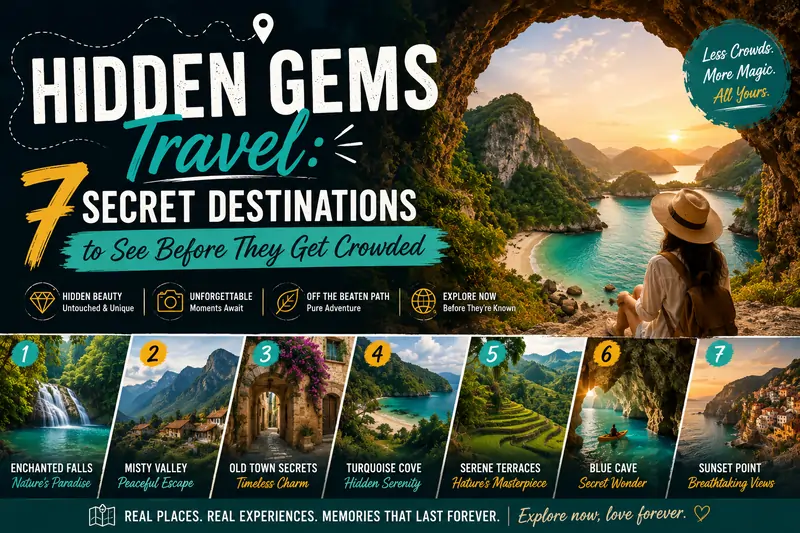
You know the feeling. You scroll through a stunning waterfall photo only to learn it’s now backed by a queue of influencers. True adventure is about more than a good angle—it’s about hidden gems travel that rewards curiosity with solitude and authenticity. These seven offbeat destinations adventure seekers will love are remote, surprising, and still blissfully undiscovered.
Each pick required real research: I looked at visitor stats, travel reports, and spoke with local guides to find places where you won’t jostle for space. The result is a list that balances adventure with responsibility. Remember to pack light, leave no trace, and support local communities.
The 7 Best Hidden Gems Travel Destinations
From cloud forests to desert canyons, here are seven secret spots worth your boots and backpack.
| Destination | Country | Best Season | Why It’s a Gem |
|---|---|---|---|
| Valle de Cocora | Colombia | Dec–Mar, Jun–Aug | World’s tallest palm trees in a misty valley |
| Faroe Islands | Denmark | May–Sep | Dramatic cliffs, fewer tourists than Iceland |
| Kidepo Valley | Uganda | Jun–Sep, Dec–Feb | Wild savannah with almost no other visitors |
| Nusa Penida | Indonesia | Apr–Oct | Raw coastlines and hidden beaches |
| Rila Lakes | Bulgaria | Jun–Sep | Seven glacial lakes, quiet hiking trails |
| Torres del Paine (off-trail) | Chile | Oct–Apr | Patagonia without the crowds |
| Svaneti | Georgia | Jun–Sep | Medieval towers, high Caucasus peaks |
1. Valle de Cocora, Colombia
Imagine walking through a valley where wax palms stretch 60 meters into the clouds. This is Cocora—part of Colombia’s coffee region. The hike loops through humid forest and open meadows, with sightings of toucans and howler monkeys. Go early morning to have the trail mostly to yourself.
Insider tip: Skip the main path after 10 AM. Instead, take the Acaime reserve trail for fewer people and more hummingbirds.
2. Faroe Islands, Denmark
Think of the Faroe Islands as Iceland’s quieter, greener cousin. Waterfalls plunge straight into the sea, sheep outnumber people, and the air smells of salt and moss. The bird cliffs at Vestmanna and the village of Gásadalur are unforgettable.
Insider tip: Rent a car and drive the undersea tunnels. Book accommodation months ahead—guesthouses fill fast even in low season.
3. Kidepo Valley National Park, Uganda
Kidepo sees a fraction of the visitors that flood Queen Elizabeth or Murchison Falls. Its semi-arid savannah is home to lions, cheetahs, elephants, and incredibly, almost no tourist vehicles. Walking safaris here are raw and unforgettable.
Insider tip: Fly into the park’s airstrip from Entebbe. The drive is long but scenic—consider a 4-day stay for deeper wildlife encounters.
4. Nusa Penida, Indonesia
Just 30 minutes by fast boat from Bali, Nusa Penida feels like a different planet. Cliffs plunge into turquoise water, and beaches like Atuh and Diamond Beach are quiet on weekdays. Manta rays glide through the crystal bays.
Insider tip: Rent a scooter and start before 7 AM to beat the day-trippers from Bali. Bring cash—ATMs are rare.
5. Rila Lakes, Bulgaria
The Seven Rila Lakes are a chain of glacial jewels in Bulgaria’s Rila Mountains. A chairlift takes you close, then a moderate hike connects the lakes. The combination of alpine scenery and low tourist volume makes this a European gem.
Insider tip: Visit in late June when the lakes are full and wildflowers bloom. Stay overnight at a nearby guesthouse for sunrise views.
6. Torres del Paine (Off-Trail), Chile
The classic W trek is famous—and crowded. But the lesser-used O circuit and backcountry routes (like the Paso John Gardner approach) offer solitude and 360-degree views of the horns. This is Patagonia for those who crave silence.
Insider tip: Book a multi-day backcountry camping permit with a specialized operator. Carry your own food and a reliable tent—weather changes fast.
7. Svaneti, Georgia
Svaneti is a highland region in Georgia where ancient stone towers dot green valleys against the Caucasus range. The village of Ushguli—one of Europe’s highest continuously inhabited settlements—feels like a living museum.
Insider tip: Hire a local guide for a multi-day trek from Mestia to Ushguli. Homestay dinners of khachapuri and local wine are a highlight.
How to Choose Your Hidden Gems Travel Destination
Not every secret spot fits every traveler. Here’s a quick decision framework to match the right offbeat destinations adventure seekers with your style:
- Wildlife priority? Go to Kidepo Valley or Svaneti.
- Coastal vibes? Choose Nusa Penida or Faroe Islands.
- Mountain trekking? Rila Lakes or Torres del Paine off-trail.
- Cultural immersion? Valle de Cocora or Svaneti.
No matter your pick, always travel with respect. These places are special because of their fragile ecosystems and local traditions.
Useful Resources
For deeper planning, check Lonely Planet’s guide to responsible travel in remote areas. Also refer to National Geographic’s tips for off-the-beaten-path trips.
Frequently Asked Questions About hidden gems travel
What does hidden gems travel mean?
It means visiting lesser-known destinations that offer authentic, uncrowded experiences before they become mainstream tourist spots.
Are hidden gems always remote?
Not always. Some are off the main path but still reachable by car or short flight. Others require multi-day treks.
How do I find hidden gems travel spots?
Research blogs of seasoned travelers, ask local guides, use lesser-known hashtags on social media, and explore UN Tourism reports.
Is hidden gems travel more expensive?
Often it can be cheaper because accommodation and food are less inflated by tourism. However, transport to remote areas can add cost.
How do I travel responsibly to hidden gems?
Leave no trace, support local businesses, avoid single-use plastics, and respect cultural norms. Keep the place clean for locals and future travelers.
Which hidden gem is best for solo adventure seekers?
Rila Lakes in Bulgaria is safe, easy to navigate, and offers plenty of hiking solo. Nusa Penida is also popular among solo travelers.
Can I visit these hidden gems with kids?
Valle de Cocora and Rila Lakes are family-friendly with moderate trails. Faroe Islands and Svaneti require more careful planning for children.
What months should I avoid crowded hidden gems?
Summer holidays (July–August) and major local festivals can bring crowds even to remote spots. Shoulder months—May, June, September—are best.
Do I need a visa for these offbeat destinations?
Check your country’s visa requirements. Faroe Islands and Torres del Paine require a Schengen visa for many travelers. Uganda and Georgia have e-visa options for most nationalities.
How do I keep these destinations secret after visiting?
Share your experience with respect—avoid geotagging exact spots, use vague location names, and encourage others to travel responsibly.
Which hidden gem has the least tourists per year?
Kidepo Valley National Park in Uganda receives under 5,000 annual visitors, making it one of the least visited parks in Africa.
Are there hidden gems travel spots in Europe?
Yes—Rila Lakes in Bulgaria, Svaneti in Georgia, and Faroe Islands are excellent European hidden gems travel choices.
What gear should I pack for offbeat destinations?
A sturdy backpack, waterproof jacket, quality hiking boots, reusable water bottle, first-aid kit, and a solar charger are essential for most remote spots.
Can I work remotely from hidden gem destinations?
Some—like Valle de Cocora and Svaneti—have guesthouses with decent Wi-Fi. Nusa Penida and Faroe Islands also offer reliable connectivity in main towns.
What language do locals speak in these hidden gems?
Spanish in Colombia and Chile, Danish and Faroese in Faroe Islands, Swahili and English in Uganda, Indonesian in Nusa Penida, Bulgarian in Bulgaria, Georgian in Svaneti. Learning a few phrases helps.
Is it safe to travel to these offbeat destinations alone?
Generally yes. Check current travel advisories, register with your embassy, and always share your itinerary with someone back home.
Which hidden gem offers the best wildlife viewing?
Kidepo Valley National Park in Uganda offers exceptional wildlife with minimal crowds. Lions, elephants, and cheetahs are regularly seen.
How do I book accommodation in remote areas?
Use hotel booking platforms, but also contact lodges directly via email or phone. Local guides can recommend homestays not listed online.
What food can I expect at these hidden gems?
Local cuisine varies widely—from Colombian arepas and Ugandan matoke to Georgian khinkali dumplings and Bulgarian shopska salad. Adventurous eaters will love it.
Will these hidden gems become overcrowded soon?
Some already are gaining attention. Visit within the next 1–2 years for the most authentic experience before infrastructure and crowds increase.